

Why might a $50,000 rollover payment arrive as $40,000?
The plan generally withholds 20% for federal tax when an eligible, entirely pretax payment goes to you. From $50,000, that leaves $40,000. A permitted direct rollover to a traditional IRA avoids this mandatory withholding.
Sources checked
Where did the $10,000 go?
- Amount leaving the plan
- $50,000
Entirely pretax employer-plan money.
- Withheld for federal tax
- $10,000
$50,000 × 20%.
- Amount paid to you
- $40,000
You need another $10,000 to roll over the full $50,000.
Ask what your plan permits
Start with the person or company that runs your 401(k): the plan administrator. Ask whether your plan lets you move money out. The options may differ for a current employer’s plan and one from a previous job.
Request the plan’s distribution notice and rollover instructions. Ask which amount is available, whether a partial rollover is possible, and whether an outstanding loan affects the transaction. A dealer can describe its service, but the plan administrator must establish what your plan permits.
Compare the move with your existing options
Write down the current plan’s investment choices, expenses, withdrawal options, and services. Compare them with the proposed IRA’s terms. Include the administrative work and costs of physical metal, along with how you would obtain cash for future spending.
Ask whether you may keep money in the plan and how that would serve your retirement needs. Then evaluate the proposed IRA and the gold purchase separately. Write down what the move improves for you and what services, costs or withdrawal features change.
- Compare total ongoing costs, not only the new account’s introductory price.
- Identify the account you would use for near-term spending and required withdrawals.
- Ask an independent adviser about account features that matter to your circumstances.
Check whether your money is pretax, Roth or after-tax
Ask the administrator to separate money that has not yet been taxed (pretax), designated Roth money, and any other after-tax amounts. They can have different rollover options. Moving untaxed money to a Roth IRA can create taxable income, even in a direct rollover.
Required minimum distributions and hardship distributions are not eligible for rollover. Have the administrator identify any RMD before calculating the amount to move. A direct rollover does not turn an ineligible payment into an eligible one.
Follow the direct rollover instructions carefully
A direct rollover sends an eligible plan payment to the receiving account. Request the custodian’s exact payee instructions. The distinction matters because an eligible taxable plan distribution paid to you generally has mandatory federal withholding, even if you intend to roll it over.
Use the table to confirm the payment route with both institutions. A direct payment does not always mean no tax. Pretax-to-Roth conversions and accounts with special rules need separate checks.
| Route | Who receives the payment? | Timing and withholding |
|---|---|---|
| IRA trustee-to-trustee transfer | The receiving IRA trustee or custodian. | No distribution paid to you; no 60-day redeposit deadline or withholding. The IRA one-rollover-per-year limit does not apply. |
| Employer-plan direct rollover | The receiving eligible plan or IRA. A check can be delivered to you but made payable to the receiving account. | No mandatory rollover withholding. The IRA one-rollover-per-year limit does not apply to plan-to-IRA rollovers. |
| Eligible distribution paid to you | You receive the money and arrange its redeposit. | Generally a 60-day rollover deadline. Taxable eligible employer-plan payments generally have 20% withholding; IRA payments have different withholding rules. The one-per-year limit generally applies to IRA-to-IRA rollovers. |
You want to roll over the full $50,000
The plan has paid you $40,000 after withholding $10,000. How much additional money is needed to complete a full rollover to a traditional IRA?
See the answer and why
$10,000 from other funds, so the receiving IRA gets $50,000 within the generally applicable 60-day deadline.
Illustration: why a $50,000 plan distribution can arrive as $40,000
Assume an entirely pretax $50,000 employer-plan distribution is eligible for rollover, paid to you, and subject to the standard 20% federal withholding, with no higher election or other deductions. It is not a Roth distribution or an RMD. The plan withholds $10,000 and pays you $40,000.
To roll over all $50,000 to a traditional IRA, you generally must deposit the $40,000 received plus $10,000 from other funds within 60 days. Rolling over only $40,000 leaves $10,000 not rolled over; that amount is generally taxable and may face an additional early-distribution tax if applicable.
The $10,000 withheld is a tax payment credited on your return, not a provider fee. Whether you receive a refund depends on the full return. An eligible direct rollover of the $50,000 to a traditional IRA avoids this mandatory withholding. This illustration is not an IRA-distribution withholding example.
Check the records before buying metal
Track the payment until the IRA confirms receipt. Compare the amount sent with the amount credited and ask about any difference. Retain the plan’s notice, payment confirmation and tax documents for your tax preparer.
Once funding is confirmed, review the exact metal order, custody arrangement and cash needed for charges or withdrawals. The rollover completes the funding step; it does not obligate you to accept a dealer’s first offer.

Check that the money arrived.
Keep the plan’s payment record beside the receiving IRA statement.
- Compare the amount sent and credited.
- Ask about any withheld tax or deductions.
- Save the payment and tax documents for your tax preparer.
About this photograph
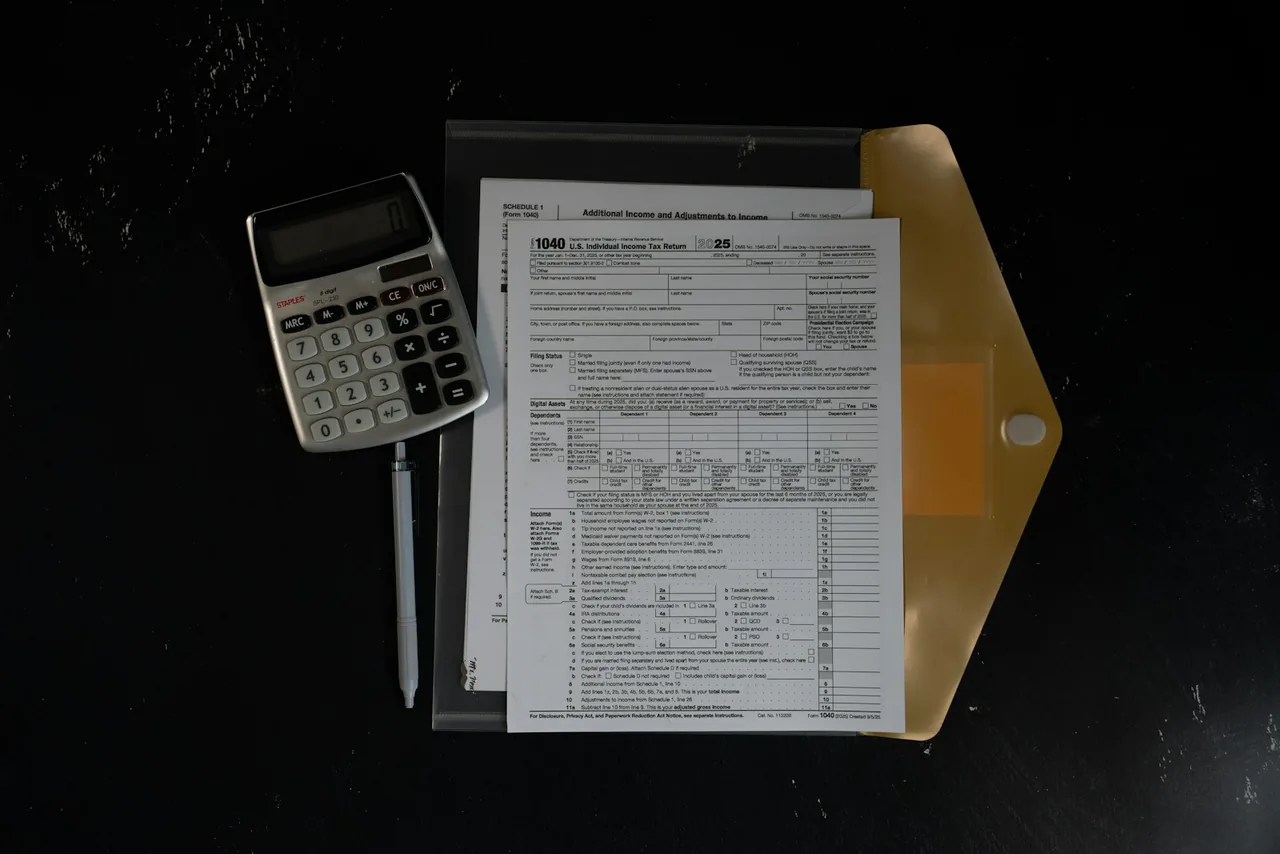
Photo: Kelly Sikkema / Unsplash (opens a new tab). Illustrative paperwork, not a completed rollover example or a tax form to copy.
Start with your plan administrator.
Bring these questions before requesting a payment or selecting a dealer.
Which money is eligible to move?
The plan’s distribution rules and the amount eligible for a rollover.
What tax types are in my balance?
Pretax, Roth and any after-tax amounts, plus the intended receiving account.
Can the payment go directly to the receiving IRA?
The payee instructions, withholding treatment and confirmation documents.
Review the key points
- Your plan administrator establishes distribution options.
- Check pretax, Roth, and after-tax balances separately.
- An eligible rollover and a metal purchase are separate decisions.
Frequently asked questions
Can I roll over a 401(k) while still employed?
It depends on the plan and the applicable distribution rules. Ask the administrator whether an in-service distribution is available and whether the amount qualifies for rollover treatment.
Does a direct rollover always avoid tax?
No. It avoids the mandatory withholding on an eligible plan rollover, but destination and account tax type still matter. Moving previously untaxed funds to a Roth IRA can create taxable income. Check the account types before giving instructions.
Check the original sources
Published by World Gold. We explain published IRS rules, regulator guidance and cited market education in plain English. Market education is identified separately; it is not tax or regulatory guidance. The source-check date records when we reviewed the guidance used here; it is not the date a rule took effect.
The examples illustrate a calculation or process; they are not provider quotes or forecasts. No provider has been rated or endorsed in this guide. Use the original guidance to check the rules that apply to your account. Source links open a new tab.
IRS: 401(k) general distribution rulesIRS: Topic 413, Rollovers from retirement plansIRS: Rollovers of retirement plan and IRA distributionsIRS: Required minimum distributions — responsibility, aggregation and rolloversCFTC and FINRA: Questions to ask before buying physical metalsSEC, NASAA and FINRA: Self-directed IRAs and the risk of fraudSend a question or correction