


Does an IRA-owned LLC make home storage okay?
No. The IRS requires qualifying IRA bullion to be held by a bank or an approved nonbank trustee. Buying it through an IRA-owned limited liability company (LLC) does not remove that requirement. Insurance on a home safe does not replace it either.
Sources checked
Who can hold the bullion?
- Purchase structure
- IRA or IRA-owned LLC
Buying through an IRA-owned company does not change the rule.
- Required holder
- Bank or approved trustee
Identify the legal entity and custody arrangement.
- Not a substitute
- Your home safe
Insurance does not replace the required holder.
Frequently asked questions
Account & storage
What is a Gold IRA?
It is usually a self-directed IRA holding eligible physical precious metals. “Self-directed” describes the broader investment choices a custodian permits. The account still follows traditional or Roth IRA rules; buying gold creates no separate tax exemption.
Can I keep IRA gold at home?
IRS guidance requires qualifying IRA bullion to be in the physical possession of a bank or an IRS-approved nonbank trustee. An IRA-owned LLC does not remove this requirement. Personal home storage is not a substitute.
Can any gold coin go into an IRA?
No. The collectibles rules contain exceptions for specified coins and bullion meeting the applicable requirements. Confirm the exact product with the receiving custodian before purchase; a dealer label alone is not enough.
Transfers & tax
Is a transfer the same as a rollover?
An IRA trustee-to-trustee transfer moves assets directly between institutions. A rollover can involve a workplace plan or a distribution paid to you. The applicable deadlines, withholding, and limits depend on the route.
Does gold make an IRA tax-free?
No. Tax treatment follows the account and transaction. Traditional IRA withdrawals are generally taxable to the extent they include untaxed amounts. Tax-free qualified Roth IRA distributions require both a five-tax-year period, starting with the first tax year for which you contributed to a Roth IRA, and age 59½ or another qualifying condition. Age alone is not enough. Withdrawals of regular Roth IRA contributions are tax-free; conversion amounts have separate rules.
Retirement withdrawals & income
Does holding gold remove required minimum distributions?
No. Required minimum distributions, or RMDs, still apply when the account rules require them. For example, an original traditional IRA owner turning 73 in 2026 generally must take the first RMD by April 1, 2027. Starting ages depend on birth year; inherited accounts have separate rules. Roth IRA owners have no lifetime RMDs. Ask for your required amount, deadline and withdrawal procedure before committing cash to metal.
Does physical gold pay retirement income?
The coins or bars themselves pay no interest or dividends. A rise in their value does not deposit cash in your IRA. To pay cash expenses or take a cash withdrawal, the account needs available cash or a sale of assets. Confirm how a metal sale is priced and when the proceeds become available.
Risk & responsibilities
Does a legitimate custodian guarantee the investment?
No. Custodial administration is not an endorsement of the dealer, the purchase price or the investment. Verify the custodian separately, then evaluate the product and written terms. The SEC warns that even a legitimate custodian can hold a fraudulent investment.
Is the value of gold guaranteed?
No. Precious-metals prices can fall. Your sale proceeds also depend on the price a buyer offers and any applicable costs. Compare a written purchase quote with a quote to sell the same items before deciding.
Does World Gold open or manage Gold IRAs?
No. World Gold provides educational information and gold market context. It does not open accounts, hold retirement assets, sell IRA metals, arrange rollovers, or select a provider for you.
Start with the account you have
Choose the question that matches your situation. Use your current account statement to confirm the type of account before following a transfer or rollover explanation. An inherited account, SIMPLE IRA, or account with after-tax money needs additional review.
| Your situation | Start here |
|---|---|
| You already have an IRA | Ask the current and receiving custodians about a direct trustee-to-trustee transfer. |
| The money is in a 401(k) | Ask the plan administrator whether the proposed amount is eligible for a direct rollover. |
| A payment has already arrived | Check the payee, amount withheld and receipt date; arrange prompt advice about rollover eligibility and deadlines. |
| You need retirement withdrawals | Ask your custodian or plan administrator about the amount due, cash availability and withdrawal instructions. |
The seller offers an LLC and an insured safe
A seller says qualifying IRA bullion can be delivered to your home because the buyer will be your IRA-owned LLC and the safe is insured. Do those facts establish that the storage complies?
See the answer and why
No. You still need the bank or approved trustee required by the IRS.
Ask for the holder’s legal name and custody agreement. Have an independent tax professional check the arrangement before sending money. The tax outcome depends on your own transaction.
Separate rules from service terms
A custodian may restrict the assets it accepts even when an investment is permitted by IRA rules. Ask two questions: “What rule applies?” and “What does your contract provide?” Keep the answers separate.
In these guides, a distribution means a withdrawal from the account. An RMD is a required minimum distribution. A custodian administers the IRA. A dealer sells the metal. Knowing which party has responsibility helps you direct the next question.
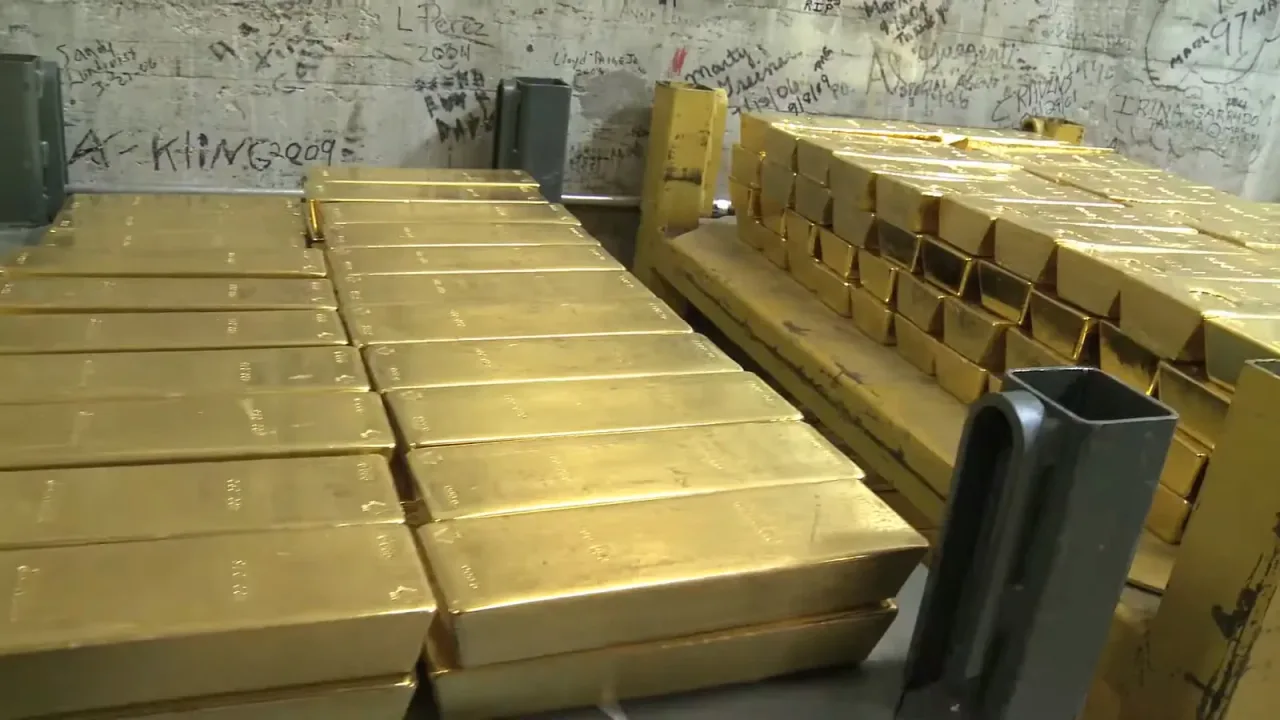
Ask who holds and records your metal.
The custody agreement and account records should explain your arrangement.
- Who is the custodian and who operates the storage?
- How is your ownership recorded?
- What happens when you want to sell or withdraw?
About this photograph
Photo: U.S. Mint / Wikimedia Commons (opens a new tab). Gold storage at West Point Mint, 2011. This is not a commercial IRA depository and does not imply that the U.S. Mint offers IRA services. Public domain in the United States.
Choose your next step
Choose the next document you need: your account statement, fee schedule, written quote, storage agreement or transfer instructions. Keep it with the rule or answer you are checking. Recheck the terms if your account, product or payment route changes.
You can use the World Gold guide and checklist without applying for an account or speaking to a salesperson. Take your documents to an independent tax professional for questions about your own transaction.
Know who should answer the next question.
Different questions need different evidence.
Is this arrangement permitted for my account?
The relevant IRS guidance and a review of your circumstances with a qualified tax professional.
Who holds and records the assets?
The custodian’s written agreement and the proposed storage arrangement.
What do I pay, and what could I receive on sale?
The dealer’s written quotes and all separately charged account and exit costs.
Review the key points
- Account type and transaction route shape the answer.
- Check tax rules and provider terms separately.
- Keep supporting documents with each decision.
Check the original sources
Published by World Gold. We explain published IRS rules, regulator guidance and cited market education in plain English. Market education is identified separately; it is not tax or regulatory guidance. The source-check date records when we reviewed the guidance used here; it is not the date a rule took effect.
The examples illustrate a calculation or process; they are not provider quotes or forecasts. No provider has been rated or endorsed in this guide. Use the original guidance to check the rules that apply to your account. Source links open a new tab.
IRS: Retirement plans FAQs regarding IRAsIRS: Investments in collectibles and the precious metals exceptionsIRS: Rollovers of retirement plan and IRA distributionsIRS: Traditional IRAsIRS: Roth IRAsIRS: Required minimum distributions — responsibility, aggregation and rolloversIRS: Retirement topics — required minimum distributionsIRS: Publication 590-B — IRA distributions and beneficiariesSEC, NASAA and FINRA: Self-directed IRAs and the risk of fraudIRS: Approved nonbank trustees and custodians — current listCFTC and FINRA: Questions to ask before buying physical metalsSend a question or correction