

Who does what in a Gold IRA?
The custodian manages the account records. The dealer sells the metal. The storage provider holds it under the custody agreement. A custodian accepting your purchase does not mean it is good value or right for you.
Sources checked
One account. Different jobs.
- Account
- Custodian
Account records and administration.
- Purchase
- Dealer
Exact products, prices and sale terms.
- Metal
- Storage provider
Physical holdings and storage terms.
An IRA account holding eligible metals
A Gold IRA usually refers to a self-directed individual retirement account that holds eligible physical precious metals. Gold is the investment inside the account. Traditional or Roth describes its tax treatment. These are separate decisions, and a gold purchase does not create a new tax exemption.
Start with your retirement needs: the bills this money may help pay, other assets you can draw on, and the work you are willing to do to manage the account. Compare holding physical metal with the investment choices already available in your current account.
Compare physical metal with a gold exchange-traded product (ETP) that your existing IRA may offer. ETP structures and risks differ. Keeping your current investments is also an option.
| What to compare | Physical gold in a self-directed IRA | Gold ETP in an IRA |
|---|---|---|
| What the account owns | Eligible coins or bullion held under the IRA custody arrangement. | An exchange-traded security. The structure may be a fund, commodity trust or note; check how it obtains gold exposure. |
| Account availability | Requires a custodian that accepts the specific metal and custody arrangement. | May be available through your existing IRA provider. Confirm that it permits the exact product. |
| Buying and selling | Ask how dealer purchases and sales are arranged, how prices are set and when cash becomes available. | Trades on a securities exchange. Check order terms, trading costs and cash availability with your provider. |
| Costs to compare | Dealer purchase and repurchase prices, plus account, storage, insurance and transaction charges. | The product’s disclosed charges, plus your provider’s trading and account fees. Compare the actual schedules. |
| Documents to review | Written product quotes, fee schedules, custody and storage agreements. | Product prospectus and disclosures, fee schedule and account terms. Check the structure, risks and any redemption conditions. |
Sources for this section (5)
SEC, NASAA and FINRA: Self-directed IRAs and the risk of fraud (opens a new tab)IRS: Traditional IRAs (opens a new tab)IRS: Roth IRAs (opens a new tab)CFTC and FINRA: Questions to ask before buying physical metals (opens a new tab)SEC Investor.gov: Exchange-traded products and their structures (opens a new tab)What can gold do for your retirement?
Some investors consider gold as one part of a diversified portfolio or as a way to respond to inflation concerns. That purpose does not make it a guaranteed store of value. Gold prices can fall, and a good past return does not establish what happens next.
Physical coins and bars pay no interest or dividends. A higher valuation is not cash arriving in the account. If you need money for living expenses, fees or required withdrawals, identify which available cash or asset sale would fund it.
Consider the proposed purchase alongside all your retirement assets. Holding several gold products does not remove exposure to the same metal price. A large commitment to one asset can increase the effect of a loss on the whole portfolio.
Before choosing a provider, ask: what job would gold do in my plan, what would I sell to buy it, and how would I meet spending needs if its price fell? Discuss the trade-offs with an independent financial professional rather than relying only on the seller.
Know who is responsible for each step
Your custodian runs the IRA and keeps its records. The dealer sells you the metal. The storage provider holds it under the custody agreement. These may be separate companies. Ask for each company’s legal name and its responsibilities in writing.
The custodian accepting gold does not mean it has checked the price or investment quality. You need to understand what you buy. Keep the account, purchase and storage documents together so you can compare them with later statements.
Who should answer this question?
Your IRA is funded. You want to know the price to buy the gold and what a buyer would pay for it today. Does the custodian accepting the gold mean it has checked those prices?
See the answer and why
No. Ask the dealer for both quotes.
A self-directed IRA custodian generally keeps the account records; it does not evaluate the investment or seller. Check the price separately. Funding an IRA does not commit you to buying metal.
- Name the custodian and storage provider.
- Obtain the dealer’s dated purchase and buyback quotes.
- Keep these documents together before authorizing the order.
Check the metal and the storage arrangement
Not all gold can go into an IRA. The rules generally restrict collectibles but allow certain coins and qualifying bullion. Give the custodian the exact product details and confirm it will accept the product before ordering.
Bullion bars and coins provide a known weight and purity of metal. Numismatic coins are sold as rare or collectible. CFTC and FINRA explain that “semi-numismatic” has no special meaning. Ask what supports an extra premium rather than treating that label as evidence of value.
For qualifying bullion, the IRS requires a bank or approved nonbank trustee to physically hold the metal. Ask the custodian who will hold it and how it will appear on your statements.
| What you are offered | What to establish before buying |
|---|---|
| Bullion bars or coins | Record the fine gold content (the actual amount of pure gold), quantity and total purchase price. Request a current quote to sell those same items. |
| A coin with a collectible premium | Ask for evidence supporting the extra price and a repurchase quote from another dealer. Compare with a standard bullion alternative containing the same amount of fine gold. A purchase premium does not guarantee a resale premium. |
| A product described as “IRA eligible” | Give the custodian the exact product, mint, weight, fineness and year or finish where relevant. Confirm acceptance before ordering. Tax eligibility and whether the price is reasonable are separate questions. |

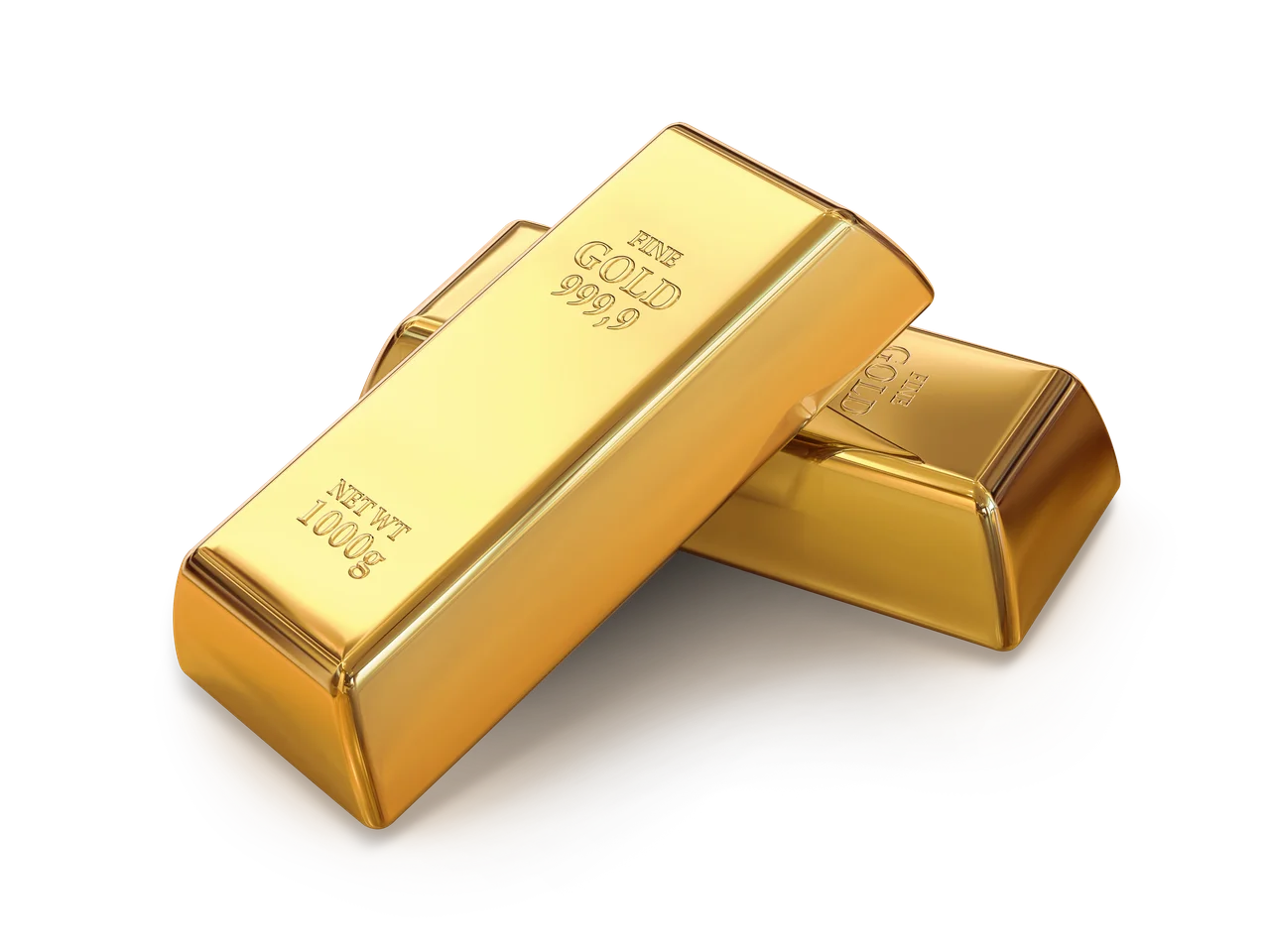
Know exactly what you would own.
Use the product details to check the written order with your custodian.
- Product and mint: does the order name the exact item?
- Weight and purity: how much pure gold does it contain?
- Acceptance: has your custodian confirmed this product?
About this photograph
Photo: Scottsdale Mint / Unsplash (opens a new tab). The photograph illustrates product markings. It is not a recommendation or confirmation that the pictured product is eligible for your IRA.
Plan how you will take retirement withdrawals
A distribution means money or assets leaving the retirement account. Before buying metal, ask how you would pay account charges and take money out for living expenses. Request the sale procedure, how a buyer’s price is set, and when cash would reach your account.
An RMD is a required minimum distribution: an amount you must withdraw from certain retirement accounts. Holding gold does not remove this duty. Confirm your amount and deadline with the custodian or tax adviser. You remain responsible for withdrawing enough on time.
| Your situation | What to confirm |
|---|---|
| You need cash for spending or account fees | Which cash balance will fund it, whether metal must be sold, and how long payment takes. |
| You own traditional IRAs and owe an RMD | Calculate each IRA’s RMD separately. The combined amount can generally come from one or more of your own traditional IRAs. Ask which account will supply it. |
| You also have a 401(k) | Its RMD generally must come from that plan; an IRA withdrawal does not satisfy it. |
| You own a Roth IRA or inherited an account | Roth IRA owners have no lifetime RMDs. Inherited accounts have different rules and need a separate review. |
Sources for this section (4)
IRS: Required minimum distributions — responsibility, aggregation and rollovers (opens a new tab)IRS: Retirement topics — required minimum distributions (opens a new tab)IRS: Publication 590-B — IRA distributions and beneficiaries (opens a new tab)CFTC and FINRA: Questions to ask before buying physical metals (opens a new tab)Bring the costs and withdrawal plan together
Write down what you pay to buy, hold and sell. Request both a purchase quote and a quote to sell the same products today. If there is a discount, check the full price after it ends.
Use the free checklist to keep your answers together. Before signing, review the funding instructions and withdrawal plan with an independent tax professional. You might decide to buy, invest less, or keep your current account.
Sources for this section (1)
CFTC and FINRA: Questions to ask before buying physical metals (opens a new tab)Know who is responsible for your account.
Keep these answers together before authorizing a metal purchase.
Who administers my IRA?
The custodian’s legal name, account agreement and fee schedule.
Who supplies the metal?
The dealer’s name and dated purchase and buyback quotes for the exact products.
Who holds the metal?
The storage provider, the custody arrangement and the applicable charges.
Review the key points
- Physical gold pays no interest or dividends; plan where retirement spending cash will come from.
- Confirm the account type, eligible metal, custodian and storage arrangement.
- Compare the cost of buying, holding and eventually selling.
- Plan for living expenses and any required withdrawals before purchasing metal.
Frequently asked questions
What is a Gold IRA?
It is usually a self-directed IRA holding eligible physical precious metals. “Self-directed” describes the broader investment choices a custodian permits. The account still follows traditional or Roth IRA rules; buying gold creates no separate tax exemption.
Can I keep IRA gold at home?
IRS guidance requires qualifying IRA bullion to be in the physical possession of a bank or an IRS-approved nonbank trustee. An IRA-owned LLC does not remove this requirement. Personal home storage is not a substitute.
Does holding gold remove required minimum distributions?
No. Required minimum distributions, or RMDs, still apply when the account rules require them. For example, an original traditional IRA owner turning 73 in 2026 generally must take the first RMD by April 1, 2027. Starting ages depend on birth year; inherited accounts have separate rules. Roth IRA owners have no lifetime RMDs. Ask for your required amount, deadline and withdrawal procedure before committing cash to metal.
Does physical gold pay retirement income?
The coins or bars themselves pay no interest or dividends. A rise in their value does not deposit cash in your IRA. To pay cash expenses or take a cash withdrawal, the account needs available cash or a sale of assets. Confirm how a metal sale is priced and when the proceeds become available.
Who is behind these guides?
World Gold is a gold-market information project founded by Alimkhan Nurekenov, an independent developer. These guides help U.S. readers understand the account, compare documented costs and prepare questions before choosing a provider.
These materials were prepared with AI assistance and checks against the linked sources. They have not yet received an independent review from a qualified U.S. retirement or tax professional. A “Sources checked” date records a source check, not a professional sign-off or IRS approval.
This educational section has no partner-referral or account-application form. World Gold does not open, administer or hold your IRA through this site.
Questions or corrections: contact@world-gold.orgCheck the original sources
Published by World Gold. We explain published IRS rules, regulator guidance and cited market education in plain English. Market education is identified separately; it is not tax or regulatory guidance. The source-check date records when we reviewed the guidance used here; it is not the date a rule took effect.
The examples illustrate a calculation or process; they are not provider quotes or forecasts. No provider has been rated or endorsed in this guide. Use the original guidance to check the rules that apply to your account. Source links open a new tab.
IRS: Investments in collectibles and the precious metals exceptionsIRS: Retirement plans FAQs regarding IRAsSEC, NASAA and FINRA: Self-directed IRAs and the risk of fraudIRS: Traditional IRAsIRS: Roth IRAsIRS: Required minimum distributions — responsibility, aggregation and rolloversIRS: Retirement topics — required minimum distributionsIRS: Publication 590-B — IRA distributions and beneficiariesCFTC and FINRA: Questions to ask before buying physical metalsSEC Investor.gov: Exchange-traded products and their structuresCFTC: Gold prices, costs and investment riskCME Group education: Physical gold produces no incomeFINRA: Concentration risk across your investmentsSend a question or correction