

Does “no annual fee” mean a cheaper Gold IRA?
Not necessarily. A higher gold price can outweigh the waived fee. Compare the same products, today’s purchase and buyback prices, and all separate charges. Check when the waiver ends.
Sources checked
Which offer costs less?
Offer A
- Purchase price
- $10,400
- − Buyback quote
- $9,600
- + Annual fee
- $0
Offer B
- Purchase price
- $10,000
- − Buyback quote
- $9,600
- + Annual fee
- $150
Offer B has the smaller price gap plus annual fee in this example.
How much does a Gold IRA cost? A published example
Here is one administrator’s published schedule, not a market average or an Augusta quote. Vantage’s January 29, 2026 schedule, checked November 14, 2026, lists these selected charges.
| Charge | Published amount |
|---|---|
| Opening the account | $50, nonrefundable. |
| Yearly administration | $325. |
| Yearly U.S. storage at Delaware Depository (DDSC) | 0.20% of total account value, with a $150 minimum. |
| Buying, selling or exchanging metals | $95 per transaction. |
| Closing the entire account | $250. |
Sources for this section (1)
Vantage: Precious metals fee schedule, revised January 29, 2026 (PDF) (opens a new tab)Start with what your money actually buys
Get a written quote listing each product, its quantity, pure gold content and total price. Ask which charges are extra. Record the quote time and market price used. A single amount labeled “gold” is not enough to compare offers.
Spot price is a market reference for the metal itself. A premium is what you pay above that metal value. The spread is the gap between a dealer’s selling and buying prices. Ask for both prices for the same products at the same time.
Sources for this section (1)
CFTC and FINRA: Questions to ask before buying physical metals (opens a new tab)Does the fee waiver save you money?
Offer A waives its annual charge but charges $400 more for the same metal. Offer B bills $150 annually. Both quote $9,600 to buy back those items today; other charges are assumed equal.
See the answer and why
Offer B is $250 lower: $400 saved on the purchase, minus its $150 annual fee.
These are fictional quotes, not a recommendation or a forecast. Check all other charges and fees in later years. The price gap is already included in the calculation; do not count it again.
Why do my gold values differ?
A metal-price calculation, an account statement and a dealer offer answer different questions. Check the valuation date, method and exact products before comparing them.
| Number you see | What it tells you | Use in the worksheet |
|---|---|---|
| Spot-based metal estimate | A market-reference calculation for the fine metal content. It is not an offer to buy your particular coins or bars. | Use as context, not as the price to sell. |
| Custodian statement value | The value recorded for the account. Ask how it was calculated and when; valuation methods vary. | Check the records, but do not substitute this value for a buyer’s quote. |
| Written buyback quote | What a buyer offers for the specified products and quantity, subject to its expiry and conditions. Identify any deductions already included. | Enter this in “Price to sell them today.” Record separately billed exit charges only once. |
Read every fee schedule
You may pay to open and manage the IRA, make transactions, store the metal and insure it. Get the custodian’s and storage provider’s full fee schedules as well as the dealer quote.
For each fee, note when it applies: once, every year, or when you take an action. Ask what changes the amount, such as account value, number of holdings, storage choice or number of transactions. For a waived fee, record when the waiver ends and who pays it.
Ask for both sides of the quote.
A purchase price tells you what you pay. A buyback quote tells you what a buyer offers today.
- Use the exact same products and quantity.
- Record both quote dates and expiry times.
- Identify deductions already included in the sale quote.
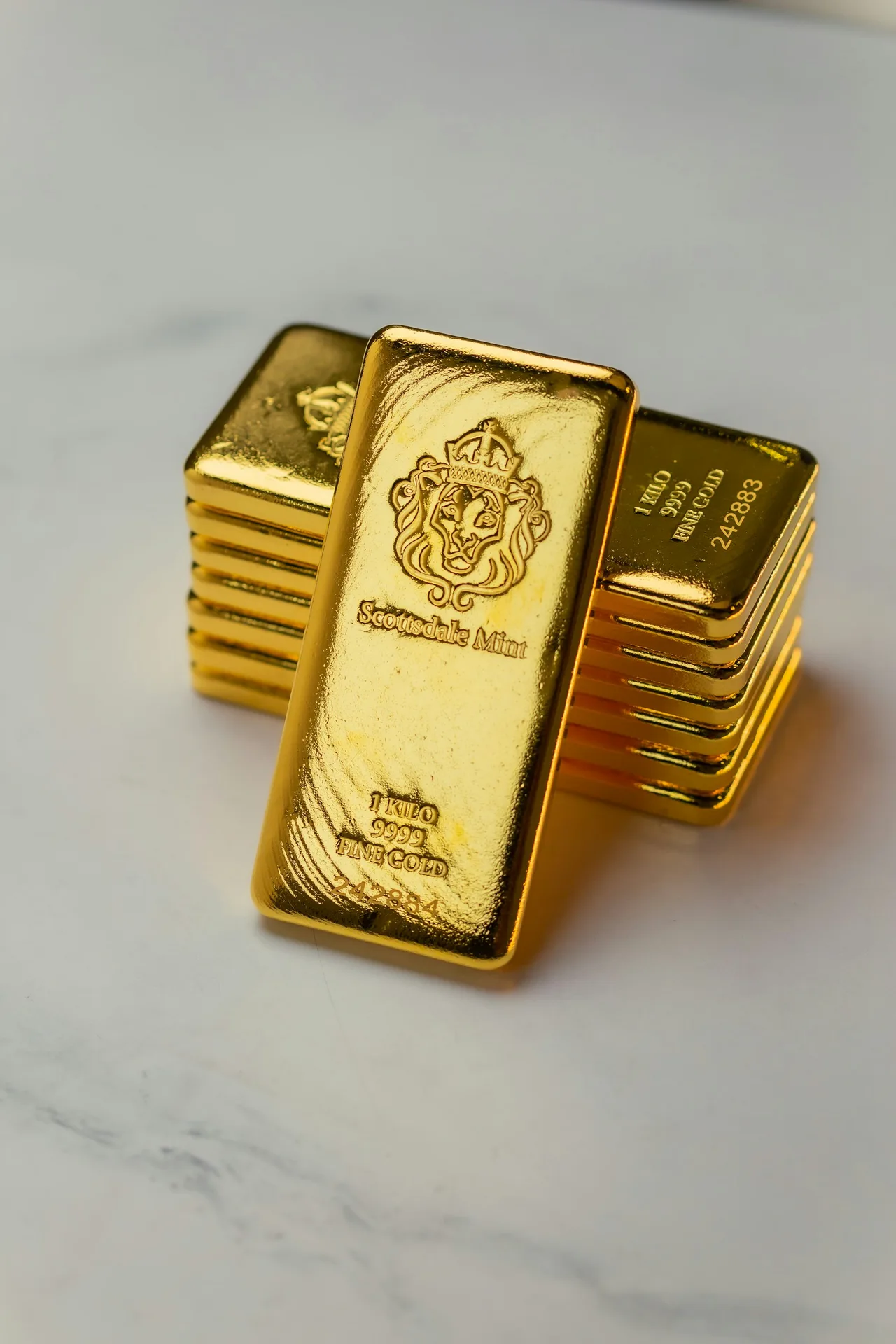
About this photograph
Photo: Scottsdale Mint / Unsplash (opens a new tab). Illustrative bullion photography, not a provider quote, endorsement or proof of IRA eligibility.
Put two written quotes into the same worksheet
Use the same metal, quantity, account type and holding period for each provider. Enter two written offers in the worksheet below to compare the quoted prices and separately billed charges. Keep the dated documents with your notes.
Mark unanswered amounts “not provided.” A blank fee does not mean a free service. If a charge depends on account value or a later market quote, record the formula or condition instead of guessing a fixed cost.
| Item | What to record |
|---|---|
| Products and purchase price | Exact items, fine weight, quantity, total price and quote expiry. |
| Current repurchase quote | What a buyer would pay today for those same items; note deductions. |
| Opening charges | Setup and initial transaction charges, identifying anything already included in the purchase price. |
| Ongoing charges | Administration, storage and insurance; billing frequency, calculation method and waiver expiry. |
| Exit charges | Sale, delivery, transfer and closure charges that apply to your proposed exit. |
Read the exit terms before buying
Ask who can buy the metal, how a sale price is established, and how cash reaches the IRA. Request any shipping, processing, transfer, or closure charges that may apply. A buyback offer needs written terms to be useful in your comparison.
Keep cost evidence separate from promotional gifts or introductory discounts. Your decision should remain understandable after an offer expires. Save dated documents so later statements can be checked against what you agreed to.
Sources for this section (1)
CFTC and FINRA: Questions to ask before buying physical metals (opens a new tab)Ask for the numbers behind the offer.
Use written figures in the worksheet. Leave missing amounts blank.
What would these exact items cost today?
Product, quantity, total purchase price, quote date and expiry.
What would I receive if I sold them today?
A dated buyback quote and any deductions, separate from the account statement value.
What is billed separately, and when?
Setup, administration, storage, transaction and closure charges; any waiver’s end date.
Review the key points
- Request product-level prices and written fee schedules.
- Use written buyback quotes, not statement or spot estimates.
- Treat missing prices as unanswered questions.
Frequently asked questions
How much does a Gold IRA cost?
There is no universal total. The dated schedule example above shows how administration and storage form only part of the cost. Compare the actual metal purchase and buyback prices alongside opening charges, transaction charges and exit costs for your arrangement.
Does a fee waiver make an offer cheaper?
Only a complete comparison can establish that. Include the metal price, the duration and conditions of the waiver, later recurring charges, and exit costs.
Is a buyback quote the same as a future price guarantee?
No. A quote helps you compare today’s purchase and sale terms. Ask how long it is valid and whether the provider has any obligation to buy later. Read the actual contract before relying on a buyback promise.
Check the original sources
Published by World Gold. We explain published IRS rules, regulator guidance and cited market education in plain English. Market education is identified separately; it is not tax or regulatory guidance. The source-check date records when we reviewed the guidance used here; it is not the date a rule took effect.
The examples illustrate a calculation or process; they are not provider quotes or forecasts. No provider has been rated or endorsed in this guide. Use the original guidance to check the rules that apply to your account. Source links open a new tab.
CFTC and FINRA: Questions to ask before buying physical metalsSEC, NASAA and FINRA: Self-directed IRAs and the risk of fraudVantage: Precious metals fee schedule, revised January 29, 2026 (PDF)Send a question or correction